Dosing and Rate of Administration for Adult Patients With cITP1
Dose
2 g/kg
2 daily doses
of 1 g/kg
(10 mL/kg given on 2 consecutive days)
Initial Infusion Rate
(first 30 minutes)
1 mg/kg/min
(0.01 mL/kg/min)
Maximum Infusion Rate
(as tolerated)
8 mg/kg/min
(0.08 mL/kg/min)
The initial infusion rate should be maintained for 30 minutes. If tolerated, the infusion rate may be gradually increased every 15 to 30 minutes after the initial infusion to a maximum of 8 mg/kg/min (0.08 mL/kg/min) as tolerated.1
| Patient Weight | mL/hr | |||||
|---|---|---|---|---|---|---|
<span>In kg</span>
|
<span>In lb</span>
|
<span>First 30 minutes</span><br>(0.01 mL/kg/min)
|
<span>Next 15-30 minutes</span><br><em>if previous rate tolerated</em><br>(0.02 mL/kg/min)
|
<span>Next 15-30 minutes</span><br><em>if previous rate tolerated</em><br>(0.04 mL/kg/min)
|
<span>Next 15-30 minutes</span><br><em>if previous rate tolerated</em><br>(0.08 mL/kg/min)
|
<span>Maximum</span><br><em>if previous rate tolerated</em><br>(0.12 mL/kg/min)
|
Example Ramp-Up Schedule for an 80 kg Adult Patient with cITP
Total Panzyga® Infusion Time for an Adult Patient with cITP1
Recommended ramp-up infusion rate if previous rate is tolerated
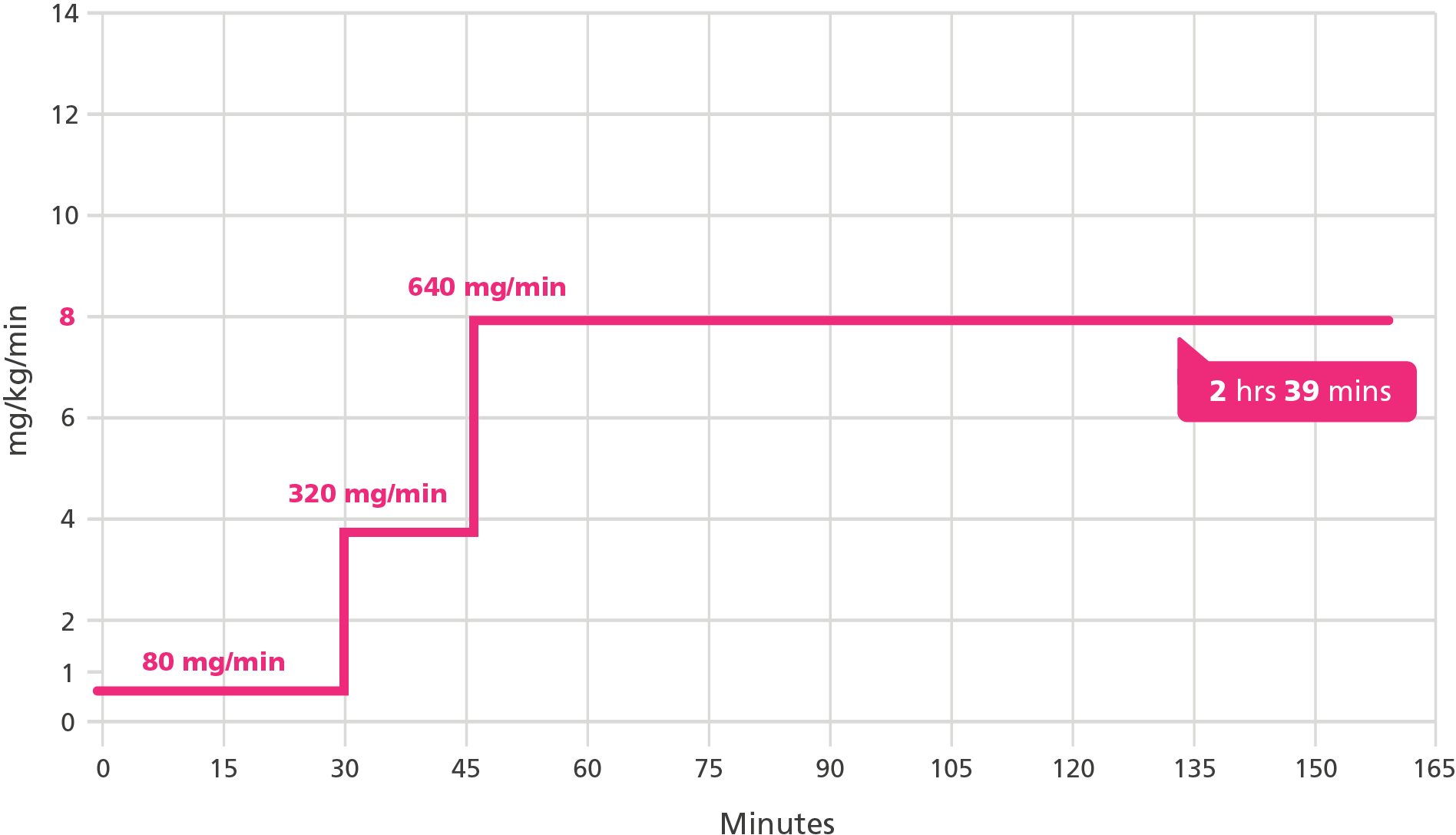
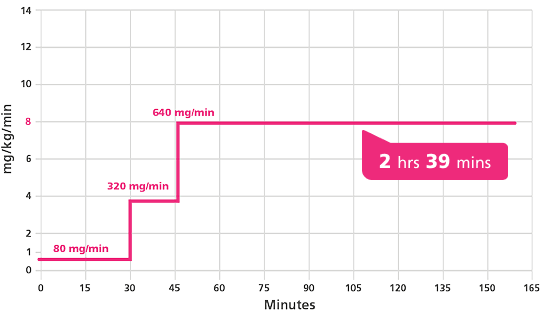
- Panzyga® should be started at 1 mg/kg/min and continued at the infusion rates stated here, if tolerated.1
- The example shown above follows a ramp-up of 1, 4, and 8 mg/kg/min.
- For patients at risk of renal dysfunction or thromboembolic events, administer panzyga® at the minimum infusion rate practicable. Do not exceed 3.3 mg/kg/min (0.033 mL/kg/min). Discontinue if renal function deteriorates.1
Example for 80-kg patient with cITP:
2 daily doses
Panzyga® Infusion Rate Chart for cITP
Patient Weight
|
mL/hr
|
|||||
|---|---|---|---|---|---|---|
In kg |
In lb |
First 30 minutes |
Next 15-30 minutes |
Maximum |
||
| 40 | 88 | 24 | 96 | 192 | ||
| 45 | 99 | 27 | 108 | 216 | ||
| 50 | 110 | 30 | 120 | 240 | ||
| 55 | 121 | 33 | 132 | 264 | ||
| 60 | 132 | 36 | 144 | 288 | ||
| 65 | 143 | 39 | 156 | 312 | ||
| 70 | 154 | 42 | 168 | 336 | ||
| 75 | 165 | 45 | 180 | 360 | ||
| 80 | 176 | 48 | 192 | 384 | ||
| 85 | 187 | 51 | 204 | 408 | ||
| 90 | 198 | 54 | 216 | 432 | ||
| 95 | 209 | 57 | 228 | 456 | ||
| 100 | 220 | 60 | 240 | 480 | ||
| 105 | 231 | 63 | 252 | 504 | ||
| 110 | 242 | 66 | 264 | 528 | ||
| 115 | 253 | 69 | 276 | 552 | ||
| 120 | 264 | 72 | 288 | 576 | ||
| 125 | 276 | 75 | 300 | 600 | ||
| 130 | 287 | 78 | 312 | 624 | ||
| 135 | 298 | 81 | 324 | 648 | ||
| 140 | 309 | 84 | 336 | 672 | ||
- 2 g/kg divided into 2 daily doses of 1 g/kg (10 mL/kg) given on 2 consecutive days1
- The initial infusion rate should be maintained for 30 minutes. Following the initial infusion, and if tolerated, the infusion rate may be gradually increased every 15 to 30 minutes, as tolerated, to the maximum infusion rate of 8 mg/kg/min (0.02 mL/kg/min)1
| Patient Weight | mL/hr | |||||
|---|---|---|---|---|---|---|
| In kg | In lb | First 30 minutes (0.01 mL/kg/min) |
Next 15-30 minutes if previous rate tolerated (0.02 mL/kg/min) |
Next 15-30 minutes if previous rate tolerated (0.04 mL/kg/min) |
Maximum if previous rate tolerated (0.12 mL/kg/min) |
|
CITP = chronic immune thrombocytopenia.
Reference: 1. Panzyga®. Prescribing information. Octapharma USA, Inc.; 2021.
Indications & Important Safety Information for panzyga® Immune Globulin Intravenous (Human) – IFAS 10% Liquid Preparation
Please click here for Full Prescribing Information, including BOXED WARNING.
- Thrombosis may occur with immune globulin intravenous (IVIg) products, including panzyga®. Risk factors may include: advanced age, prolonged immobilization, hypercoagulable conditions, history of venous or arterial thrombosis, use of estrogens, indwelling central vascular catheters, hyperviscosity, and cardiovascular risk factors. Thrombosis may occur in the absence of known risk factors.
- Renal dysfunction, acute renal failure, osmotic nephrosis, and death may occur in predisposed patients who receive IVIg products, including panzyga®. Patients predisposed to renal dysfunction include those with a degree of pre-existing renal insufficiency, diabetes mellitus, age greater than 65, volume depletion, sepsis, paraproteinemia, or patients receiving known nephrotoxic drugs. Renal dysfunction and acute renal failure occur more commonly in patients receiving IVIg products containing sucrose. Panzyga® does not contain sucrose.
- For patients at risk of thrombosis, renal dysfunction, or acute renal failure, administer panzyga® at the minimum dose and infusion rate practicable. Ensure adequate hydration in patients before administration. Monitor for signs and symptoms of thrombosis and assess blood viscosity in patients at risk for hyperviscosity.
See Full Prescribing Information, Warnings and Precautions (5.2, 5.4)
Indications and Usage
Panzyga® (Immune Globulin Intravenous [Human] – ifas) is indicated for the treatment of primary humoral immunodeficiency (PI) in patients 2 years of age and older; this includes, but is not limited to, congenital agammaglobulinemia, common variable immunodeficiency, X-linked agammaglobulinemia, Wiskott-Aldrich syndrome, and severe combined immunodeficiencies; chronic immune thrombocytopenia (cITP) in adults to raise platelet counts to control or prevent bleeding; and chronic inflammatory demyelinating polyneuropathy (CIDP) in adults to improve neuromuscular disability and impairment.
Contraindications
Panzyga® is contraindicated in patients who have a history of severe systemic hypersensitivity reactions, such as anaphylaxis, to human immunoglobulin and in IgA-deficient patients with antibodies against IgA and history of hypersensitivity.
Warnings and Precautions
- Monitor renal function, including blood urea nitrogen and serum creatinine, and urine output in patients at risk of developing acute renal failure.
- Hyperproteinemia, increased serum osmolarity, and hyponatremia may occur in patients receiving panzyga®.
- Aseptic meningitis syndrome may occur in patients receiving panzyga®, especially with high doses or rapid infusion.
- Hemolysis that is either intravascular or due to enhanced red blood cell sequestration can develop subsequent to panzyga® treatments. Risk factors for hemolysis include high doses and non-O-blood group. Closely monitor patients for hemolysis and hemolytic anemia.
- Monitor patients for pulmonary adverse reactions (transfusion-related acute lung injury [TRALI]).
- Monitor blood pressure prior to, during, and following panzyga® infusion.
- Carefully consider the relative risks and benefits before prescribing the high dose regimen (for cITP) in patients at increased risk of volume overload.
- Panzyga® is made from human plasma and may contain infectious agents, e.g. viruses and theoretically, the Creutzfeldt-Jakob disease agent.
Adverse Reactions
- PI – The most common adverse reactions reported in greater than 5% of subjects were: headache, nausea, fever, fatigue, and abdominal pain.
- cITP in adults – The most common adverse reactions reported in greater than 5% of subjects were: headache, fever, nausea, vomiting, dizziness, and anemia.
- CIDP in adults – The most common adverse reactions reported in greater than 5% of subjects were: headache, fever, dermatitis, and blood pressure increase.
The risk information provided here is not comprehensive; See full Prescribing Information and Boxed Warning for panzyga®.
To report suspected adverse reactions, contact Octapharma USA, Inc. at 1-866-766-4860 or the FDA at 1-800-FDA-1088 or www.fda.gov/medwatch.
Indications & Important Safety Information for panzyga® Immune Globulin Intravenous (Human) – IFAS 10% Liquid Preparation
Please click here for Full Prescribing Information, including BOXED WARNING.
- Thrombosis may occur with immune globulin intravenous (IVIg) products, including panzyga®. Risk factors may include: advanced age, prolonged immobilization, hypercoagulable conditions, history of venous or arterial thrombosis, use of estrogens, indwelling central vascular catheters, hyperviscosity, and cardiovascular risk factors. Thrombosis may occur in the absence of known risk factors.
- Renal dysfunction, acute renal failure, osmotic nephrosis, and death may occur in predisposed patients who receive IVIg products, including panzyga®. Patients predisposed to renal dysfunction include those with a degree of pre-existing renal insufficiency, diabetes mellitus, age greater than 65, volume depletion, sepsis, paraproteinemia, or patients receiving known nephrotoxic drugs. Renal dysfunction and acute renal failure occur more commonly in patients receiving IVIg products containing sucrose. Panzyga® does not contain sucrose.
- For patients at risk of thrombosis, renal dysfunction, or acute renal failure, administer panzyga® at the minimum dose and infusion rate practicable. Ensure adequate hydration in patients before administration. Monitor for signs and symptoms of thrombosis and assess blood viscosity in patients at risk for hyperviscosity.
See Full Prescribing Information, Warnings and Precautions (5.2, 5.4)
Indications and Usage
Panzyga® (Immune Globulin Intravenous [Human] – ifas) is indicated for the treatment of primary humoral immunodeficiency (PI) in patients 2 years of age and older; this includes, but is not limited to, congenital agammaglobulinemia, common variable immunodeficiency, X-linked agammaglobulinemia, Wiskott-Aldrich syndrome, and severe combined immunodeficiencies; chronic immune thrombocytopenia (cITP) in adults to raise platelet counts to control or prevent bleeding; and chronic inflammatory demyelinating polyneuropathy (CIDP) in adults to improve neuromuscular disability and impairment.
Contraindications
Panzyga® is contraindicated in patients who have a history of severe systemic hypersensitivity reactions, such as anaphylaxis, to human immunoglobulin and in IgA-deficient patients with antibodies against IgA and history of hypersensitivity.
Warnings and Precautions
- Monitor renal function, including blood urea nitrogen and serum creatinine, and urine output in patients at risk of developing acute renal failure.
- Hyperproteinemia, increased serum osmolarity, and hyponatremia may occur in patients receiving panzyga®.
- Aseptic meningitis syndrome may occur in patients receiving panzyga®, especially with high doses or rapid infusion.
- Hemolysis that is either intravascular or due to enhanced red blood cell sequestration can develop subsequent to panzyga® treatments. Risk factors for hemolysis include high doses and non-O-blood group. Closely monitor patients for hemolysis and hemolytic anemia.
- Monitor patients for pulmonary adverse reactions (transfusion-related acute lung injury [TRALI]).
- Monitor blood pressure prior to, during, and following panzyga® infusion.
- Carefully consider the relative risks and benefits before prescribing the high dose regimen (for cITP) in patients at increased risk of volume overload.
- Panzyga® is made from human plasma and may contain infectious agents, e.g. viruses and theoretically, the Creutzfeldt-Jakob disease agent.
Adverse Reactions
- PI – The most common adverse reactions reported in greater than 5% of subjects were: headache, nausea, fever, fatigue, and abdominal pain.
- cITP in adults – The most common adverse reactions reported in greater than 5% of subjects were: headache, fever, nausea, vomiting, dizziness, and anemia.
- CIDP in adults – The most common adverse reactions reported in greater than 5% of subjects were: headache, fever, dermatitis, and blood pressure increase.
The risk information provided here is not comprehensive; See full Prescribing Information and Boxed Warning for panzyga®.
To report suspected adverse reactions, contact Octapharma USA, Inc. at 1-866-766-4860 or the FDA at 1-800-FDA-1088 or www.fda.gov/medwatch.